Thinking about adding an accessory dwelling unit to your Morgan Hill home? You’re not alone. ADUs are a smart way to create flexible space for family, a home office, or potential rental income. The rules can feel complex, but once you understand how state law and Morgan Hill’s local standards work together, the path gets a lot clearer. In this guide, you’ll learn what an ADU is, how California’s protections help you, what Morgan Hill typically requires, and how ADUs may affect your home’s value. Let’s dive in.
ADU and JADU basics
An accessory dwelling unit is a self-contained home on the same lot as your primary residence. It has its own kitchen and bathroom and can be attached to your main home or built as a detached structure. A junior ADU, or JADU, is a smaller unit created within the footprint of your existing home, typically up to 500 square feet and with more limited features.
You can add living space in several ways:
- Conversion ADU: Turn an existing area like a garage, basement, or spare room into an ADU.
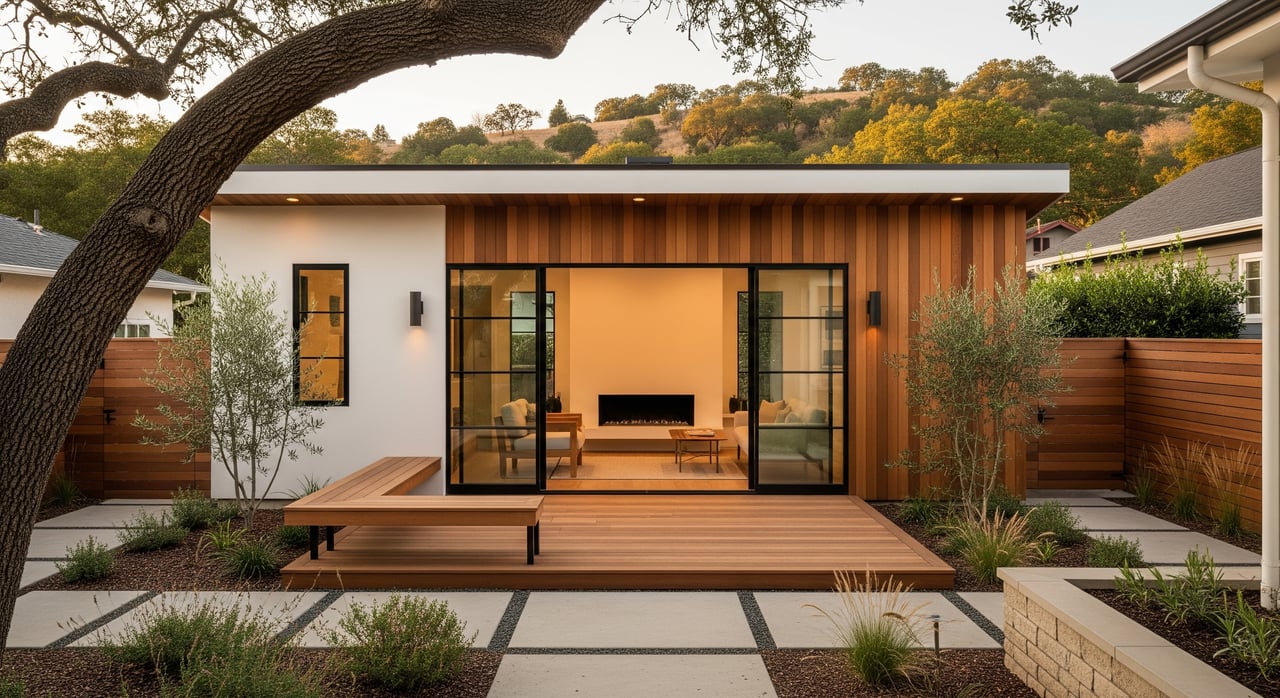
- Detached new construction: Build a separate, stand-alone ADU in the yard.
- Attached addition: Expand your home with an attached ADU that has its own entrance.
- Multi-family ADUs: Certain ADU options exist for multi-family properties, subject to specific limits.
Each path has different design, cost, and permitting implications, but the same core state rules apply.
State rules that set the baseline
California’s ADU laws, including Government Code section 65852.2, require cities to allow ADUs and JADUs in most residential zones. Most standard ADU applications are processed ministerially, which means the city uses objective checklists and does not require discretionary hearings for qualifying projects. Local governments can apply objective standards like setbacks, height, and design criteria, but they cannot use them to effectively prohibit ADUs.
A few statewide protections to know:
- Owner-occupancy: Recent reforms generally prevent cities from requiring you to live on-site for many newly permitted ADUs. Always confirm current local code for any exceptions.
- Parking: Cities can require parking for ADUs, but state law provides several waivers, including for certain conversions and properties near transit. Parking rules are more flexible than for primary homes.
- Impact and utility fees: State law restricts how impact fees are applied, especially for smaller ADUs. Many fees must be reduced or proportional. Your final costs depend on local fee schedules and utility rules.
These baseline protections guide how Morgan Hill reviews and approves ADUs.
Morgan Hill permitting at a glance
Your first stop should be the City of Morgan Hill Planning Division. A quick pre-application consultation helps you confirm zoning, overlays like hillside or historic areas, and any utility constraints. This early step can save time and cut costly revisions later.
A typical ministerial process looks like this:
- Pre-application and intake: Discuss your parcel, concept, and allowed ADU types with a planner.
- Plan submittal: Provide a plot plan, floor plans, elevations, and utility details. Include parking, setback distances, and location of existing and proposed structures.
- Planning review: City staff checks objective standards like setbacks, height, and lot coverage.
- Building plan check: Building, mechanical, electrical, and plumbing permits are reviewed for code compliance.
- Inspections and final: Construction proceeds with inspections leading to final occupancy.
Have your site plan, utility information, and any grading details ready. If your property is within a special overlay, expect additional objective standards or coordination.
Local standards that shape your design
Morgan Hill applies local numeric standards that align with state law. While numbers can change, the city typically regulates:
- Setbacks and height: Detached ADUs must meet minimum setbacks and maximum height limits. Conversions inside existing structures often have more flexibility.
- Lot coverage or floor area: Your lot’s coverage or FAR cap can influence the size and placement of a detached ADU.
- Design and materials: In areas like historic districts or hillside zones, you may need to meet objective architectural standards on materials or roof forms.
- Parking and access: Local rules apply, but state law offers waivers in many cases. Narrow lots or limited street frontage can make parking the key constraint.
For exact numbers, review the Morgan Hill Municipal Code or speak with planning staff. This keeps your design aligned with the current standards.
Utilities, fire safety, and septic
ADUs must connect to water, sewer, and power per local requirements. Most Morgan Hill homes are on municipal services, but capacity checks and connection policies vary by provider.
Key considerations:
- Sewer and water: You may be allowed to share the main home’s meters or be required to install separate connections. Utility providers and the city determine what is feasible.
- Electric and gas: Some ADUs share utility meters, while others need new service. Metering affects billing, rental setup, and project cost.
- Septic systems: If your property relies on septic, the system’s capacity may limit feasibility. County environmental health needs to confirm any upgrades.
- Fire requirements: In higher fire-risk areas, expect ignition-resistant construction, defensible space, and specific access standards. The Morgan Hill Fire Department will advise during review.
Build your budget with potential trenching, meters, and connection fees in mind. Utility details can materially affect costs and timelines.
Fees and timeline expectations
Plan for plan-check fees, building permit fees, and development impact fees. Under state rules, smaller ADUs often qualify for reduced or proportional impact fees compared to larger builds. Your total varies by ADU type, size, and utility needs.
Timelines depend on scope:
- Simpler conversions: With complete plans that meet objective standards, permitting can be achieved in a few months.
- New detached ADUs: Projects that involve grading, utility extensions, or complex site work commonly run 4 to 12 months from design through final inspection.
Allow for plan-check corrections and contractor lead times. Early planning and a complete submittal are your best tools to keep things moving.
Lot and site realities in Morgan Hill
Every parcel is different, and site features often drive ADU design. A quick feasibility check can highlight potential challenges and options.
Watch for:
- Lot size and shape: Smaller or irregular lots can constrain placement of a detached ADU. JADUs inside your existing home are less affected by lot size.
- Existing structures: Garage conversions are popular because they avoid new lot coverage. Make sure any structure you plan to convert is permitted and in good condition.
- Easements and CCRs: Utility and access easements may limit where you can build. HOA rules can complicate design and rental plans. State ADU law may preempt some restrictions, but legal conflicts can be complex, so consult professionals.
- Topography and soils: Hillside sites may require grading, retaining walls, or geotechnical reports. These add cost and can extend the schedule.
- Parking and access: If you remove a garage space, confirm whether replacement parking is required or waived under state rules.
Identifying these constraints early helps you right-size the project and avoid redesigns.
ADUs, usability, and resale value
ADUs can offer meaningful lifestyle flexibility. Many owners use them for intergenerational living, guest space, a home office, or to generate rental income. JADUs provide similar benefits with a smaller footprint and lower cost.
From a financing and valuation perspective:
- Rental income: Lenders vary in how they treat ADU income for mortgage qualification. Check with your lender early on documentation and underwriting policies.
- Appraisals: Appraisers may value ADUs as income-producing features or as added livable space based on comparable sales. Permits and quality of construction matter.
- Insurance and taxes: Adding an ADU generally impacts homeowners insurance and property tax assessments. The Santa Clara County Assessor can clarify how new construction is assessed.
In the Bay Area, properly permitted and well-designed ADUs often improve marketability and can support a higher resale price. That said, some buyers prefer larger yards or less on-site activity. The net effect depends on neighborhood norms, rental demand, privacy, and parking.
Quick checklists to get started
For homeowners considering an ADU
- Confirm zoning and allowed ADU types with the City of Morgan Hill Planning Division.
- Check for overlays like hillside, historic, floodplain, or wildfire zones, plus any recorded easements.
- Verify water and sewer service, or septic capacity if applicable.
- Pull permit history for your home and any accessory structures.
- Ask about utility meter policies and estimated hookup fees.
- Request the current ADU fee schedule and timeline estimates.
- Consult a local architect or designer with Morgan Hill ADU experience, and get contractor estimates.
- Consider a pre-application meeting to confirm standards before finalizing plans.
For buyers evaluating a property for ADU potential
- Ask whether any existing ADU is fully permitted and request final inspection documents.
- If no ADU exists, ask about site constraints like easements, septic, or slopes that could limit feasibility.
- Confirm parking needs and neighborhood norms if you plan to rent the ADU.
- Check with lenders on how ADU income might be used for qualification.
- Review CCRs or HOA rules for any conflicts with ADU plans.
Your next step
If you are considering an ADU, start with a quick call to Morgan Hill Planning to discuss your parcel and confirm current standards. Then line up design and budget options that match your site. If you are buying or selling and want to understand how an ADU could affect value, marketing, and buyer appeal, our team can help you evaluate options and timing.
We live and work in South County and guide clients through ADU-related decisions every day. From pricing and market positioning to buyer strategy and pre-listing improvements through Compass Concierge, we help you plan with confidence. When you are ready to talk next steps, reach out to the Todd Brown Team.
FAQs
Can I build an ADU on my Morgan Hill single-family lot?
- In most cases, yes. State law requires cities to allow ADUs on most single-family lots, but local setbacks, coverage limits, and overlays will determine what fits on your property.
What is the difference between an ADU and a JADU?
- An ADU is a self-contained home with its own kitchen and bath, while a JADU is a smaller unit created within your existing home and typically has more limited features.
How big can my Morgan Hill ADU be?
- State law sets broad maximums, and Morgan Hill applies local numeric standards through lot coverage and floor area limits. Check the current municipal code or speak with planning staff for exact sizes.
Will Morgan Hill require me to add parking for an ADU?
- It depends on your site and ADU type. State rules provide waivers in many cases, especially for conversion ADUs or properties near transit, so confirm your parcel’s requirements with planning staff.
Do I need separate utility meters for an ADU?
- Policies vary. Some ADUs share existing meters while others require separate service. The city and utility providers will confirm what is allowed and any related fees.
How long does ADU permitting and construction typically take?
- Simple conversions can often move from plans to final in a few months, while new detached ADUs with grading or utility work commonly take 4 to 12 months depending on scope and corrections.